VWRP ETF Review: How Vanguard’s Accumulating Fund Works
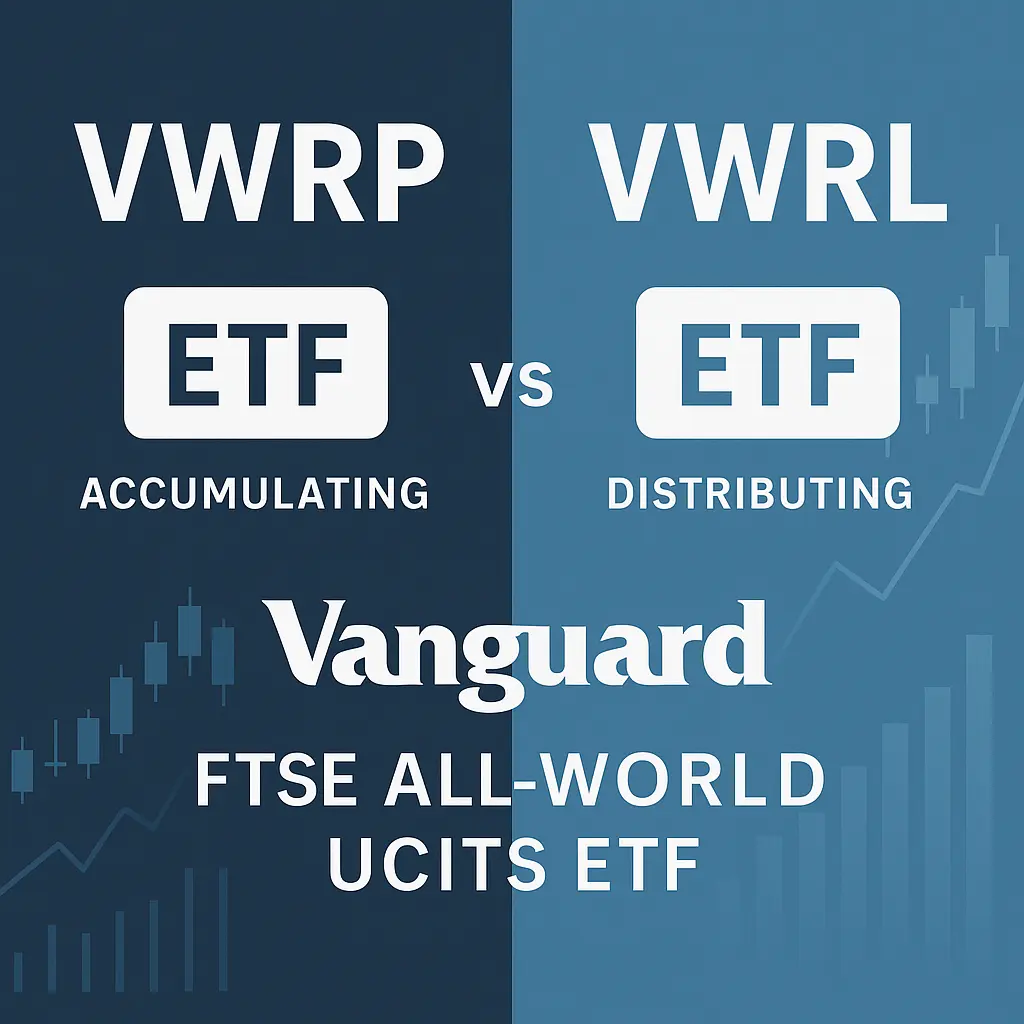
Type “VWRP” into a UK broker’s search bar and you’ll find a fund holding a slice of nearly every major public company on Earth — from Apple to a mid-cap bank in Taiwan you’ve never heard of. That’s the entire pitch of the Vanguard FTSE All-World UCITS ETF, and it’s why VWRP has become one of the most-bought funds on platforms like Hargreaves Lansdown and Trading 212. But most explainers stop at “it tracks the world” and leave out the parts that actually change how much money ends up in your pocket: how the dividends are handled, what it really costs, and how it differs from its sibling fund that everyone confuses it with.
This isn’t a recommendation to buy or sell anything — VWRP, like any investment, can fall as well as rise, and what’s right for one portfolio isn’t right for another. What follows is what the fund is, how it works, and where people usually get confused.
What VWRP Actually Holds
VWRP is short for the Vanguard FTSE All-World UCITS ETF (USD) Accumulating, and its job is to mirror the FTSE All-World Index as closely as it can. That index isn’t a curated top-50 list — it spans roughly 3,700 large and mid-cap companies across both developed and emerging markets, weighted by market capitalization. In practice that means the biggest companies (the usual American tech names) make up a large chunk of the fund simply because they’re the biggest companies in the world, not because Vanguard picked favorites.
The fund is domiciled in Ireland and runs under the UCITS structure, which is the standard European framework for pooled investment funds. It uses full physical replication, meaning it actually buys the underlying shares in proportion to the index rather than using derivatives or synthetic swaps to fake the exposure. That’s a detail worth knowing because it affects transparency and counterparty risk — you own, indirectly, a piece of the actual companies rather than a contract betting on their performance.
The One Letter That Confuses Everyone: Accumulating vs. Distributing
Here’s the thing almost every quick summary glosses over. Vanguard sells two versions of essentially the same fund: VWRP and VWRL. They track the identical index, hold the identical companies, and charge the identical fee. The only real difference is the “P” versus the “L” — accumulating versus distributing.
VWRL pays out the dividends it collects from underlying companies to you, in cash, on a quarterly basis. VWRP does the opposite: it keeps those dividends inside the fund and uses them to buy more of the underlying shares automatically. You never see the cash land in your account; instead, the fund’s unit price quietly reflects the reinvestment over time. Vanguard launched the accumulating share class years after the distributing one, specifically because UK and European investors kept asking for a version that didn’t require manually reinvesting a small dividend payment every three months.
This distinction matters most for tax. Inside an ISA or a SIPP, it barely matters which one you hold, since both are shielded from dividend and capital gains tax. Outside a tax wrapper, in a general investment account, the two behave differently on paper. With VWRL, the dividend is taxable income the year you receive it. With VWRP, there’s no cash dividend to declare, but UK tax rules around “excess reportable income” mean the reinvested amount can still need to be reported — it isn’t a way of avoiding dividend tax altogether, just of deferring how it shows up.
What VWRP Costs and How It’s Performed

The ongoing charge, or OCF, for VWRP sits at 0.22% a year. That’s low by the standards of actively managed funds, though it’s slightly higher than some ultra-cheap single-region trackers — you’re paying a small premium for genuinely global diversification in one fund rather than needing to buy and rebalance separate US, European, and emerging-market ETFs yourself.
Because VWRP and VWRL hold the same securities, their underlying total return is essentially the same; the only divergence in headline price charts comes from the fact that VWRP’s price keeps climbing as dividends are folded back in, while VWRL’s price resets lower after each distribution. On the London Stock Exchange, VWRP trades in the range of a bit above £140 at recent prices, with assets under management running into the tens of billions of pounds — a sign of just how widely it’s held by UK investors building long-term portfolios.
Myths Worth Correcting
A common misconception is that accumulating ETFs like VWRP let you dodge dividend tax completely. They don’t. The underlying companies are still paying dividends; VWRP just reinvests them on your behalf instead of cutting you a check. If your shares sit in a general investment account rather than an ISA or SIPP, HMRC still expects those reinvested dividends to be accounted for as income in the year they’re generated, even though no cash actually reaches your bank account.
Another myth: that VWRP is somehow a different, newer, or better strategy than VWRL. It isn’t a rival product or an upgrade — it’s the same fund wearing a different wrapper for a different tax and convenience preference. Neither share class is objectively superior; the “right” one depends on whether you’re investing inside a tax shelter and whether you want the discipline of automatic reinvestment or the flexibility of cash income.
What’s Changed Recently
Nothing structural has shifted with VWRP itself this year — it still tracks the same FTSE All-World Index at the same 0.22% charge. What has changed is the environment around it: more UK brokers now offer commission-free trading on ETFs like VWRP, which has quietly lowered the real-world cost of building a position through regular monthly contributions rather than lump sums. That’s made VWRP an even more common building block in “buy it and leave it” portfolios, particularly among younger investors using apps that support fractional share purchases.
Frequently Asked Questions
Is VWRP a good investment? That depends entirely on your goals, time horizon, and risk tolerance — it’s not something a general article can answer for you. What VWRP offers is broad, low-cost, diversified global equity exposure; whether that fits your situation is a decision worth making with your own research or a financial adviser.
What’s the difference between VWRP and VWRA? VWRA is essentially the same accumulating fund but denominated and traded in US dollars on certain exchanges, whereas VWRP is the GBP-traded line on the London Stock Exchange. The underlying holdings are the same.
Does VWRP pay dividends? Not to you directly — the underlying companies pay dividends, but VWRP reinvests them inside the fund automatically rather than distributing cash.
Is VWRP the same as VWRL? They track the same index and hold the same companies, but VWRP reinvests dividends while VWRL pays them out in cash.
What is the ongoing charge for VWRP? The ongoing charges figure is 0.22% per year, as of the most recent fund data.
Can I hold VWRP in an ISA? Yes — VWRP is a standard UCITS ETF and is widely available to hold inside a Stocks and Shares ISA or a SIPP through most major UK brokers.
The Bottom Line
VWRP isn’t complicated once you strip away the ticker-symbol confusion: it’s a low-cost way to own a small piece of thousands of the world’s companies, with dividends reinvested automatically instead of paid out as cash. The real decision most people actually need to make isn’t “VWRP or some exotic alternative” — it’s whether the accumulating structure or the distributing one (VWRL) fits how and where they’re investing. Get that part right, and the rest of the fund takes care of itself.